Z.ai releases GLM-5.4 with a looped transformer architecture
Chinese artificial intelligence laboratory Z.ai has released GLM-5.4, its first model utilizing a looped transformer architecture.
2 min read, Tuesday, 24 November
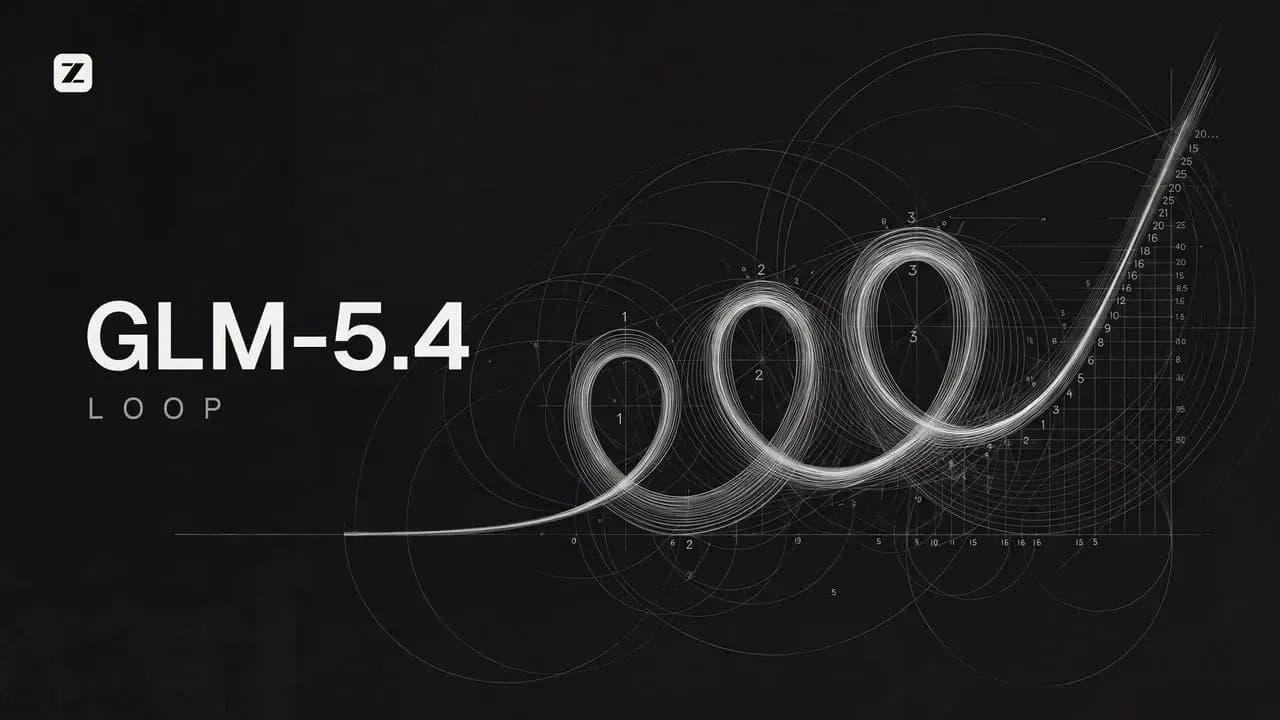
Chinese artificial intelligence laboratory Z.ai has released GLM-5.4, a new model that introduces a looped transformer architecture to the lab's lineup. In a standard transformer model, each layer runs once per forward pass. By contrast, a looped transformer uses a group of weight-shared layers that run for multiple iterations, refining the hidden states from the previous pass.
Key facts
- Author
- WorkOS
Understanding looped transformers
This iterative approach creates a deeper network without increasing the overall parameter count of the model. Similar techniques are beginning to appear elsewhere in the industry. For instance, Thinking Machines Lab recently released Inkling 2 Mini, which runs its middle layers three times for every token to apply more reasoning to tasks like agentic coding.
Access and availability
GLM-5.4 is currently not available as open weights. Users can access the model through the Z.ai application programming interface, which is a set of rules allowing different software programs to communicate. Access requires signing up for a specific Coding Plan subscription, as the model cannot be reached through the regular application programming interface tier at this time.
Both the coding plan and the regular application programming interface share the same OpenAI-compatible responses endpoint located at https://api.z.ai/api/v1. Developers using the coding plan credentials can connect to this endpoint to work with the new model directly.
Visual capabilities and output style
Testing with image generation prompts, such as pelican renderings across low, high, and maximum effort levels, shows that GLM-5.4 produces results comparable in quality to models from other major laboratories like OpenAI or Anthropic. This marks a continuation of the stylistic transition that began between the GLM-5.2 and GLM-5.3 generations, moving away from the distinctive visual style seen in earlier iterations.
Source: Original announcement
Worth a read?
Comments