Google DeepMind returns with Gemini 4 Neon as labs push reasoning limits
Google DeepMind reclaims frontier standing with the breakout adoption of Gemini 4 Neon, while open-weight labs and proprietary leaders push boundaries in reasoning, coding, and protein design.
2 min read, Wednesday, 25 November
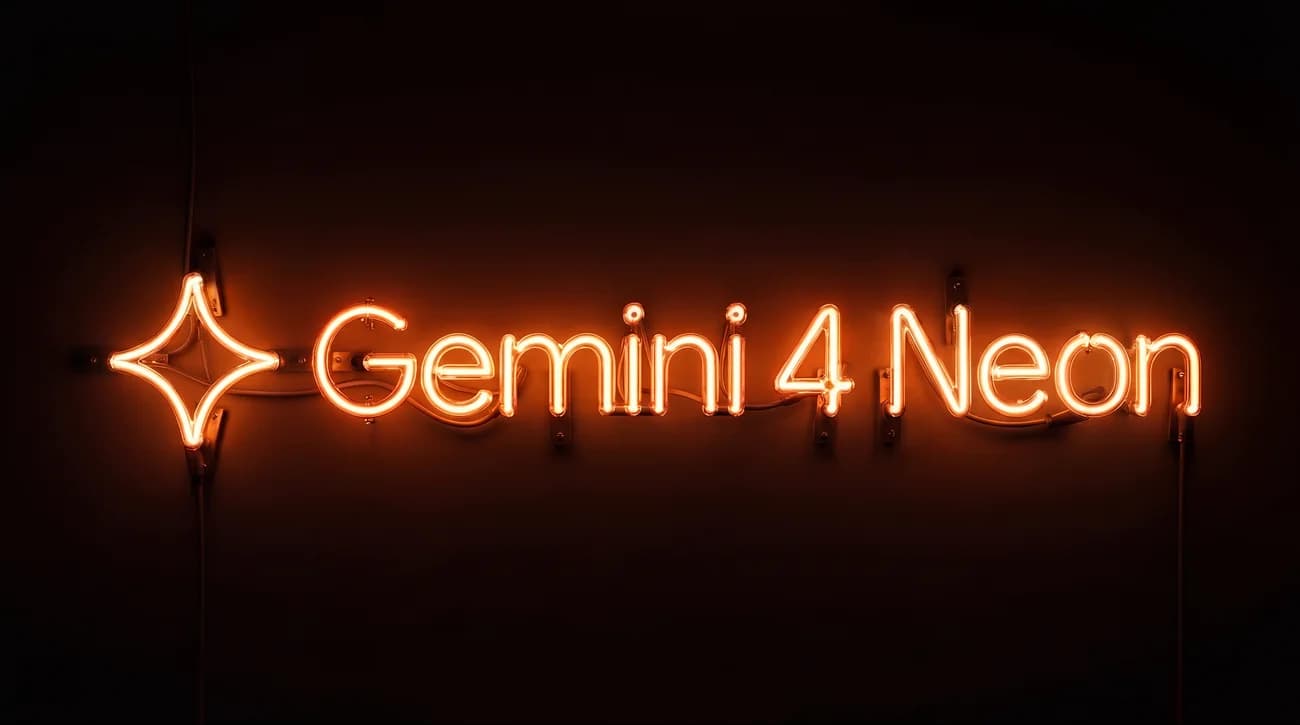
Google DeepMind has staged a firm return to frontier standing following the rollout of Gemini 4 Neon. Just months after leadership departures and questions over Gemini 3, Neon has set a Day-1 usage record on Google paid application programming interfaces, with Antigravity token volume climbing 82 percent since the launch of Argon six weeks prior. Neon is now available to Google Workspace customers through the Gemini application, and Perplexity has crossed 120 billion Neon tokens, doubling its daily volume in three days. Arav Srinivas places Neon's intelligence between Opus and Fable, praising its response style.
Alongside this release, labs have advanced reasoning models across several scientific and technical domains. OpenAI released a preprint detailing GPT-6 models designing new protein shapes and sequences entirely through reasoning and code, bypassing specialized biology models. In testing, 14 of 107 resequenced proteins showed binding, alongside 128 of 182 redesigned small antibodies. In software engineering, GPT-6 Cyber helped validate 948 Linux kernel bugs that could grant local root access, generating patches for maintainer review.
Key facts
- SenseNova-Loop-9B GAIA score
- 69.90
- Qwen3.8-27B GAIA score
- 66.99
- SenseNova-Loop-9B model size
- 4.9 GB
- ERNIE 5.5 Flash context window
- 1M tokens
- GAIA Score
- SenseNova-Loop-9B: 69.90
- Qwen3.8-27B: 66.99
- Model Size
- SenseNova-Loop-9B: 4.9 GB
- Qwen3.8-27B: —
- License
- SenseNova-Loop-9B: Apache 2.0
- Qwen3.8-27B: —
| Metric | SenseNova-Loop-9B | Qwen3.8-27B |
|---|---|---|
| GAIA Score | 69.90 | 66.99 |
| Model Size | 4.9 GB | — |
| License | Apache 2.0 | — |
Open-weight and efficient architectures continue to narrow the gap with proprietary models. SenseNova released SenseNova-Loop-9B, a model that runs its middle 24 of 32 layers twice. At roughly 4.9 gigabytes at 4-bit quantization under an Apache 2.0 license, it surpasses Qwen3.8-27B on the GAIA benchmark with a score of 69.90 versus 66.99. Meanwhile, Ernie 5.5 Flash Preview emerged as a 280-billion parameter mixture-of-experts model with 14 billion active parameters and up to 1 million tokens of context, served in vLLM.
Infrastructure developments also point toward changing hardware dynamics. Official SPEC CPU 2026 results show AMD Venice-HF processors performing 11 to 21 percent faster per thread than Nvidia Vera on agentic and electronic design automation tasks. Additionally, previews of the AMD MI550x indicate multi-rack Ethernet scaling beyond 500 to 1,000 graphics processing units at a single switch hop.
Source: Original announcement
Worth a read?

Comments