Google DeepMind introduces AlphaGenome 2 for cellular DNA prediction
Google DeepMind has unveiled AlphaGenome 2, a new artificial intelligence model designed to predict how DNA mutations affect specific cell types and states.
2 min read, Thursday, 12 November

Researchers at Google DeepMind have introduced AlphaGenome 2, an artificial intelligence model built to unravel how changes in our DNA affect different types of cells. Nearly every cell in the human body carries the same genetic code, but different cells switch different genes on and off. As a result, the same genetic variant can cause very different effects depending on the cell type and its current state.
Key facts
- Tissues
- 68
- Cell profiles
- 100 million
- Detail level
- AlphaGenome: Broader
- AlphaGenome 2: Finer-grained
- Variant identification
- AlphaGenome: Standard
- AlphaGenome 2: Nearly twice as many variants
| Metric | AlphaGenome | AlphaGenome 2 |
|---|---|---|
| Detail level | Broader | Finer-grained |
| Variant identification | Standard | Nearly twice as many variants |
Training on millions of cells
The new model was trained on more than 100 million individual cell profiles across 68 tissues. This extensive training data allows AlphaGenome 2 to act as a predictive engine for human genetics, turning static cell atlases — massive data repositories that catalog individual cells — into dynamic simulation tools.
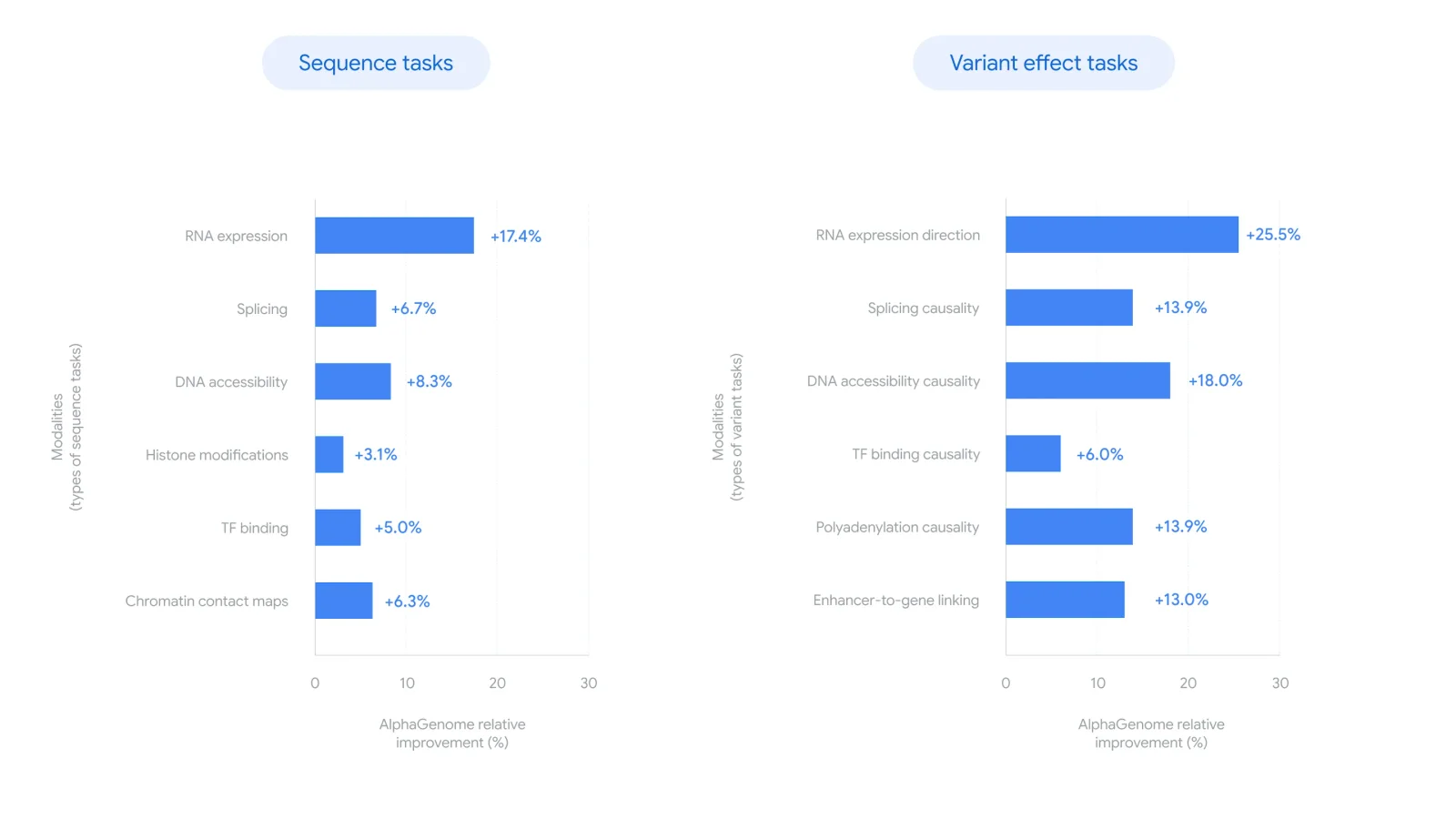
According to the team, the model identifies nearly twice as many variants that alter gene expression in cells compared to its predecessor. Furthermore, it can make predictions about new cell types and biological states without requiring additional training.
Applications in medicine
Researchers involved in the project note that the breakthrough lies in connecting human genetics directly to cell biology. When developing treatments, scientists target specific proteins and cell types, making granular predictions essential for understanding disease mechanisms.
While AlphaGenome 2 offers greater detail than the original model, it also demands more computing power. Because of these higher costs, the older model remains useful for broader genome-wide projects.
Google is making AlphaGenome 2 available for non-commercial research through an application programming interface — a set of rules and tools that lets software programs communicate with each other — starting today, alongside a limited private preview for commercial research.
Source: Original announcement
Worth a read?



Comments