Anthropic and Stanford researchers independently release proofs of Riemann hypothesis
An Anthropic mathematician and the Claude model have presented a computer-verified proof of the Generalized Riemann Hypothesis.
3 min read, Saturday, 21 November
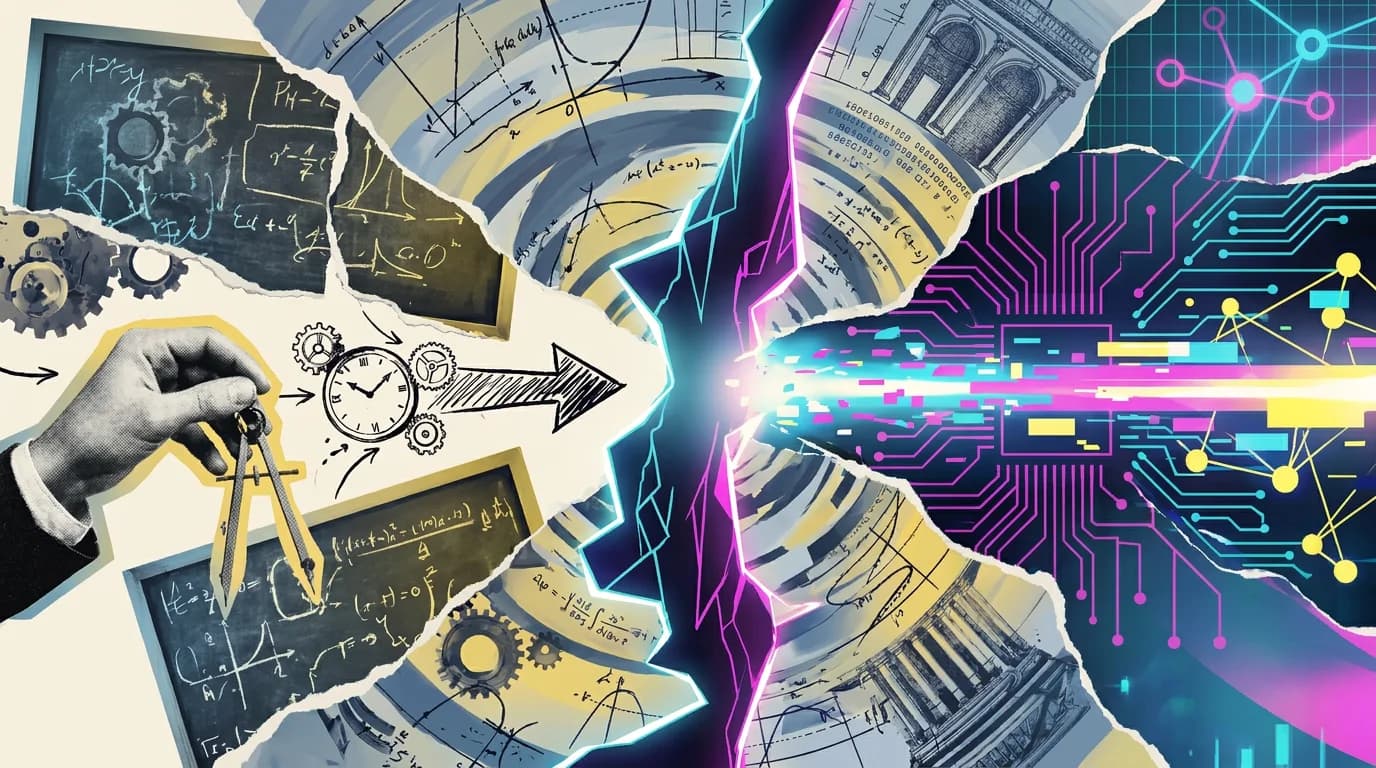
An artificial intelligence model and a human researcher have claimed a major breakthrough in mathematics by presenting a proof of the Generalized Riemann Hypothesis, a foundational problem that has remained unsolved since 1859.
Levent Alpöge, a mathematician at Anthropic, announced that he worked alongside the company's Claude model to develop a proof. Instead of writing a traditional paper, Alpöge released the work in the Lean programming language — a computer language that acts as a digital referee to check step-by-step logical deductions against math's basic rules without unproven assumptions.
Key facts
- Date of announcement
- November 20, 2026
- Bounty amount
- $1-million
- Original proposition year
- 1859
The path to the proof
Alpöge treated the problem as a lifelong goal. Over several months, he worked with the model, setting the direction and testing simplified models before the AI took over the complex final steps. To solve the puzzle, the pair built on historical methods by chaining special mathematical transformations together. According to Alpöge, the model discovered that for a number sequence of length X, exactly as many transformations must be chained as the square root of X.
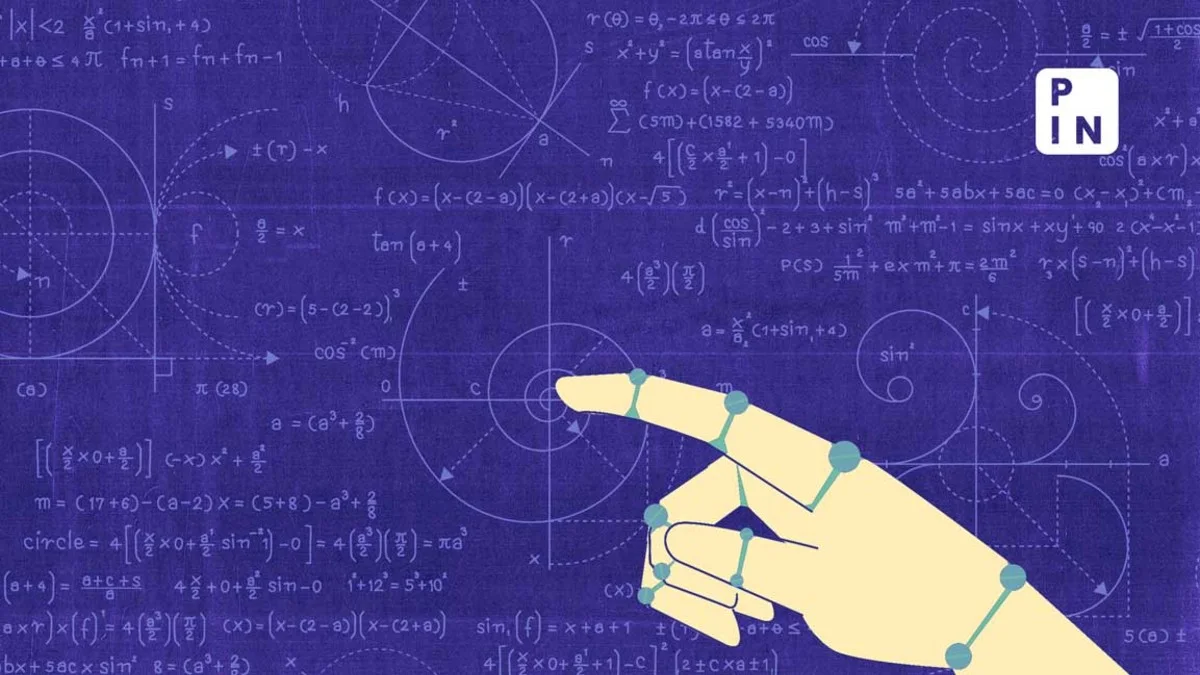
Because the AI spelled out every basic logical step, the full argument would span over 250,000 pages if printed out. To make it reviewable, Alpöge published the proof only in Lean, divided into 14 data packages. Alpöge noted that the model outpaced him in certain subfields, leaving him to present a result whose surrounding mathematics he has not yet fully mastered.
A competing human draft from Stanford
Hours after the Anthropic announcement, Stanford University researchers published an independent, entirely human approach to the same problem. Ravi Vakil, a Stanford math professor and president of the American Mathematical Society, shared a draft proof written by mathematician Alessandro Masullo.
Masullo had spent months refining the draft with guidance from Stanford number theorist Brian Conrad. Although the researchers originally planned to spend a full year vetting the work before publishing, the sudden release of the AI-generated proof forced them to share their current version immediately.
Shortly after the announcement, mathematicians using various AI models flagged potential issues in Masullo's draft. Vakil emphasized that all issues must be thoroughly reviewed and resolved by the mathematics community before the human-authored proof can be accepted as correct.
Why the hypothesis matters
Proposed by Bernhard Riemann in 1859, the Riemann hypothesis concerns prime numbers like 2, 3, 5, and 7, which serve as the indivisible building blocks of all other whole numbers. Riemann suggested that the non-trivial zeros of his zeta function all lie on a single vertical line on a two-dimensional map, a discovery that explains the apparent randomness of prime distribution.
Confirming the Generalized Riemann Hypothesis would validate hundreds of dependent mathematical theories overnight, extending from simple equations to high-dimensional geometry. Both claims are being taken seriously by number theorists due to the rigorous computer verification backing the AI proof and the extensive human vetting behind the Stanford draft.
Source: Original announcement
Worth a read?


Comments