Warp introduces software factory infrastructure for AI coding agents
Warp has launched a new system designed to help smaller companies build and operate automated software factories. The platform provides a ready-made infrastructure layer for deploying coding agents across standard development stages.
Published by Jin · 2 min read · 19 AUG 2026
- v1alpha1
- https://app.warp.dev/api/v1/agent/runs
Companies are still figuring out how software development should work in the age of artificial intelligence. One popular approach is the software factory, which uses an agent loop — a system where autonomous AI programs perform multi-step tasks — to handle traditional stages of building software.
On Tuesday, the AI coding company Warp introduced Warp Factories, a system designed to make building and operating these factories easier. Operating as an infrastructure layer, the platform gives organizations a simple environment for deploying agents along with a roadmap for using them.
Solving infrastructure challenges
While larger firms like Stripe and Ramp have built custom internal automation systems from scratch, smaller companies often lack the resources to do so. Setting up cloud agent execution, local environments, shared memory, and evaluation frameworks requires a significant engineering effort.
Warp Factories provides this architecture out of the box. The system is based on standard software development phases, including triage, specification, implementation, review, and verification. Because it uses an agentic approach, any of these steps can be automated.
Workflow integration and management
Users can choose their own coding models and harnesses, such as Codex or Claude Code. The platform also integrates with common workplace tools, including ticketing systems like Linear and Jira, as well as messaging apps like Slack and Teams.
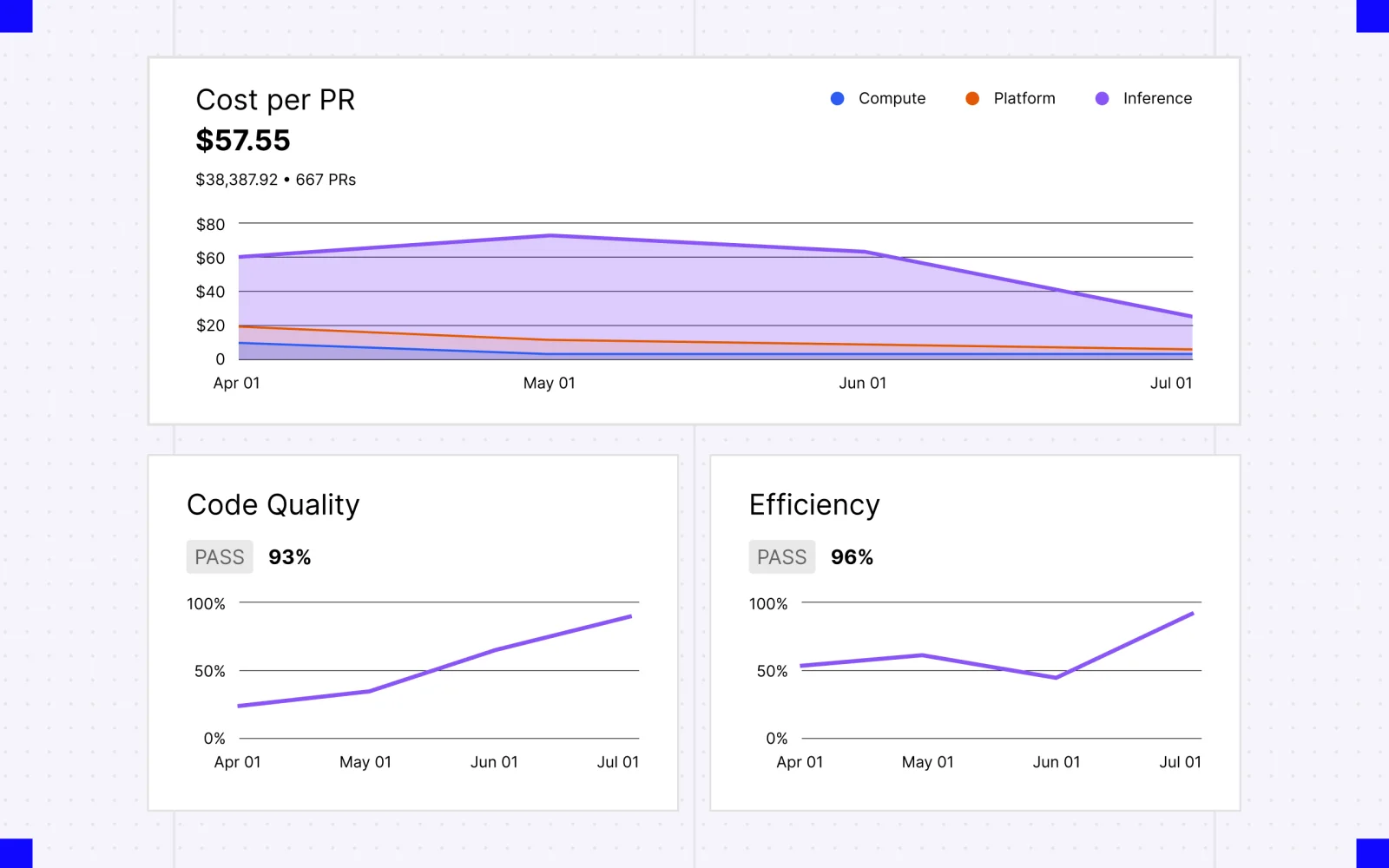
Beyond writing code, the system offers managers tools to track performance metrics and monitor overall token spend — the cost associated with processing data through language models. It also supports self-improvement loops to optimize the process over time.
Source — Original announcement ↗
Worth a read?
Comments · 0