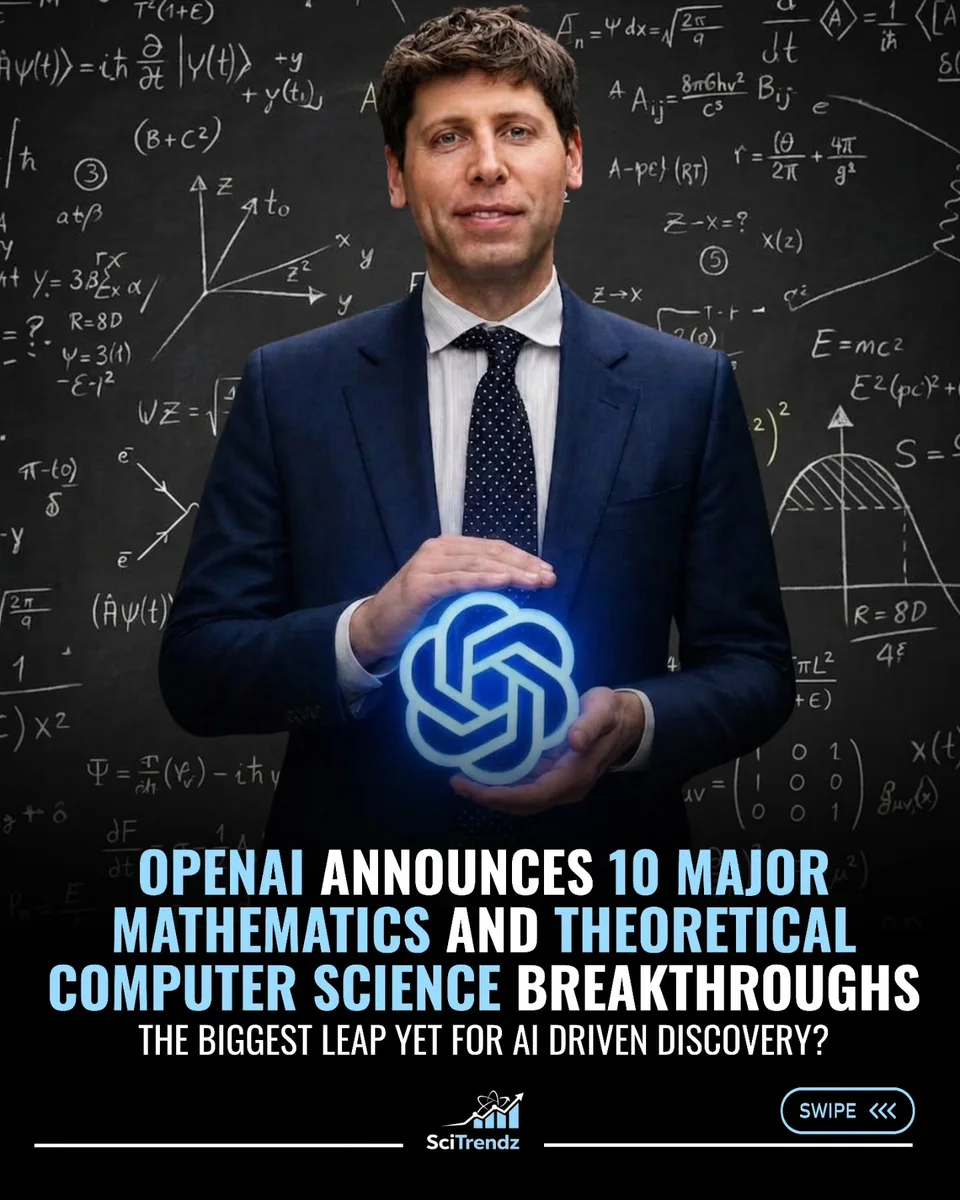
OpenAI publishes breakthroughs in mathematics achieved with GPT
OpenAI has published ten advances in mathematics achieved using GPT models. According to the company, these findings span high-dimensional geometry, group theory, and quantum complexity. Researchers are now reviewing the results to understand their broader impact on scientific discovery.
Published by Jin · 1 min read · 9 AUG 2026
- 10 mathematical advances
- Lean proof assistant
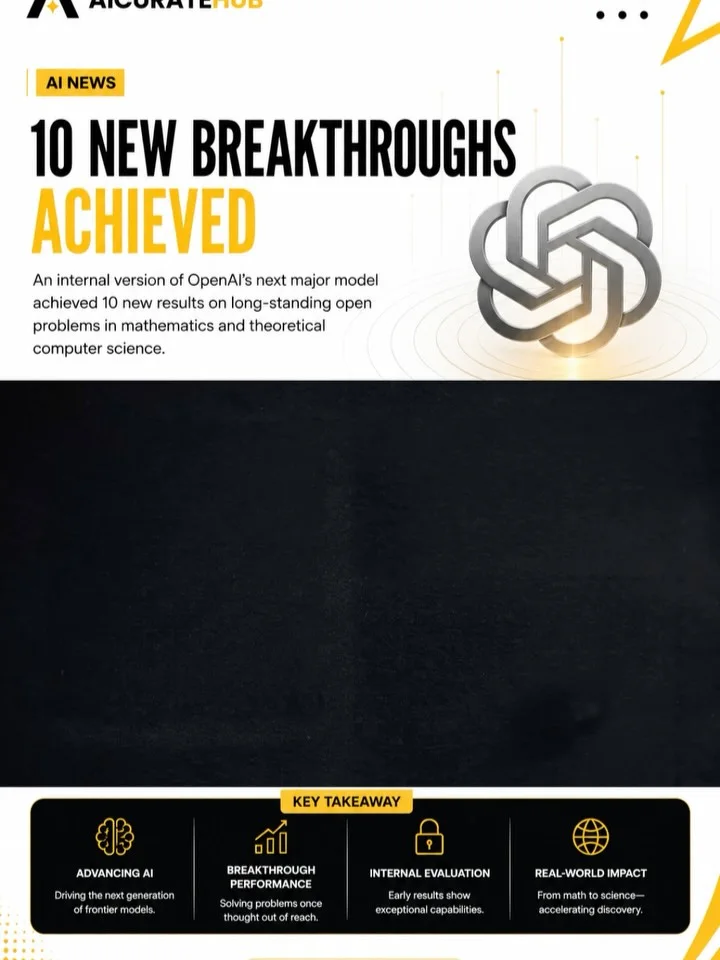
OpenAI published ten advances in mathematics achieved using GPT models. The company reported that these findings address several long-standing open problems across various mathematical disciplines, including high-dimensional geometry, coding theory, and group theory.
Exploring Complex Mathematical Problems
The reported advances cover multiple intricate areas of theoretical computer science and mathematics. According to the published details, the model tackled high-dimensional sphere packing, binary and spherical codes, non-sofic groups, and Connes’s rigidity conjecture. Additional problem areas include arithmetic circuit complexity, quantum parallel repetition, the closest vector problem, Ehrhart’s volume conjecture, multicolor Ramsey numbers, and extremal number conjectures.
Verification and Future Impact
To help ensure the validity of these mathematical arguments, the system formalized the proofs using Lean — a formal verification system that checks each logical step for mathematical correctness. OpenAI indicated that human researchers assisted in preparing the manuscripts, while the core mathematical arguments were generated by the system. The mathematics community is now examining these proofs to determine their broader implications for automated reasoning and future scientific research.

Source — openai.com ↗
Worth a read?
Comments · 0