OpenAI model solves hard math theorem and invents new proof strategy
An artificial intelligence system developed by OpenAI produced a machine-verifiable proof for a 2006 mathematical theorem without human assistance.
2 min read, Tuesday, 24 November

An artificial intelligence system called GPT-6.2 Astra has generated a formalized, machine-verifiable proof of a 2006 mathematical theorem without any human help during its execution. According to evaluations by Vals AI, this is the first known proof of Smoktunowicz's gap theorem written in Lean, a programming language used for writing mathematical proofs that computers can verify.
The theorem explains that when a mathematical system multiplies its basic building blocks, its growth is either very slow or very fast, leaving no middle ground.
Key facts
- Benchmark tasks
- 56 research-level formalization tasks
- Astra run cost
- $21.58
- Astra run duration
- 94 minutes
- Proof length
- 1,800 lines of Lean
- Autoform-Hard limits
- three hours and a $200 budget
- Solved tasks
- GPT-6.2 Sol: 48
- Claude Fable 5.2: 48
- GPT-6.2 Astra: 49
| Metric | GPT-6.2 Sol | Claude Fable 5.2 | GPT-6.2 Astra |
|---|---|---|---|
| Solved tasks | 48 | 48 | 49 |
A Different Route
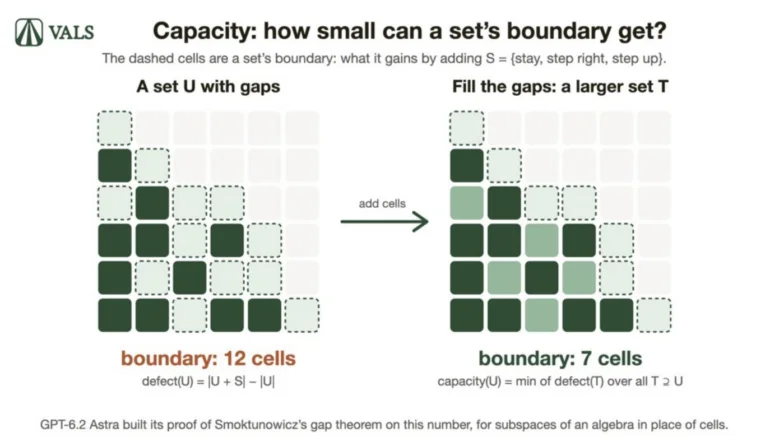
Because key foundations of the original mathematical proof were missing from the standard math library known as Mathlib, the model took a different route than published human proofs. It used a concept called capacity, which is a metric from existing research that checks the minimum number of elements added per computation step.
This breakthrough took place on Autoform-Hard, a subset of Meta FAIR's AutoformBench curated by Vals AI. The benchmark contains fifty-six tasks that ten other models failed to solve within their assigned budget.
Cost and Execution
When the model attempted to stop working after forty-seven minutes having spent eight dollars, the system rejected the attempt because unsolved submissions cannot be accepted until twenty dollars has been spent.
After nine minutes of silence with no code input while it searched for a new approach, the model delivered an eighteen hundred-line proof at the ninety-four-minute mark for a total cost of twenty-one dollars and fifty-eight cents. This performance places it at the top of the benchmark leaderboard with forty-nine solved tasks, just ahead of GPT-6.2 Sol and Claude Fable 5.2, which each solved forty-eight tasks.
Source: Original announcement
Worth a read?



Comments