OpenAI model helps solve physics lattice problem
An AI model developed by OpenAI has assisted in producing a proof addressing a long-standing challenge in particle physics.
2 min read, Tuesday, 17 November

Physicists study the fundamental particles and forces of the universe using the Standard Model. Simulating these systems on a computer grid known as a lattice has yielded major insights, such as calculating the mass of a proton. However, fully simulating the Standard Model has remained out of reach due to how the weak force handles left- and right-handed particles differently.
On basic lattices, this asymmetry introduces unwanted ghost particles. Researchers use specialized components called overlap fermions to remove them, but configuring their phase correctly has proven difficult for decades.
Key facts
- Author
- Nathaniel Craig
- AI Model
- GPT-6 Astra
- Author Affiliation
- University of California, Santa Barbara
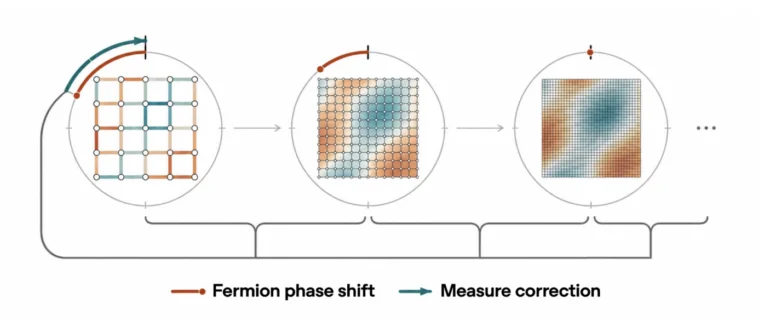
Solving the phase problem
Nathaniel Craig, a physicist at the University of California, Santa Barbara and visiting scientist at OpenAI, developed a strategy to resolve the phase issue by comparing lattices of increasing resolution. While he had the conceptual framework, he needed assistance to prove it worked across all necessary scenarios.
GPT-6 Astra converted the strategy into a working construction and led the development of the detailed mathematical proof. Independent physicists reviewed the findings and provided feedback that helped confirm the validity of the approach.
Recent progress in automated proofs
This development is part of a broader trend of artificial intelligence systems tackling complex problems in mathematics and physics. These include automated contributions to geometry, fluid dynamics, and number theory, though researchers continue to debate the long-term implications of automated discovery for traditional academic fields.
Source: Original announcement
Worth a read?


Comments