
Nvidia releases open-source software to link idle home computers for AI processing
Nvidia has introduced PAIR, an open-source tool that connects idle household computers to handle complex artificial intelligence workflows. The software pools underutilized processing power across different devices without interrupting regular tasks.
Published by Jin · 2 min read · 4 SEPT 2026
- PAIR
- Nvidia
- Open-source
- RTX 20-series
- M4
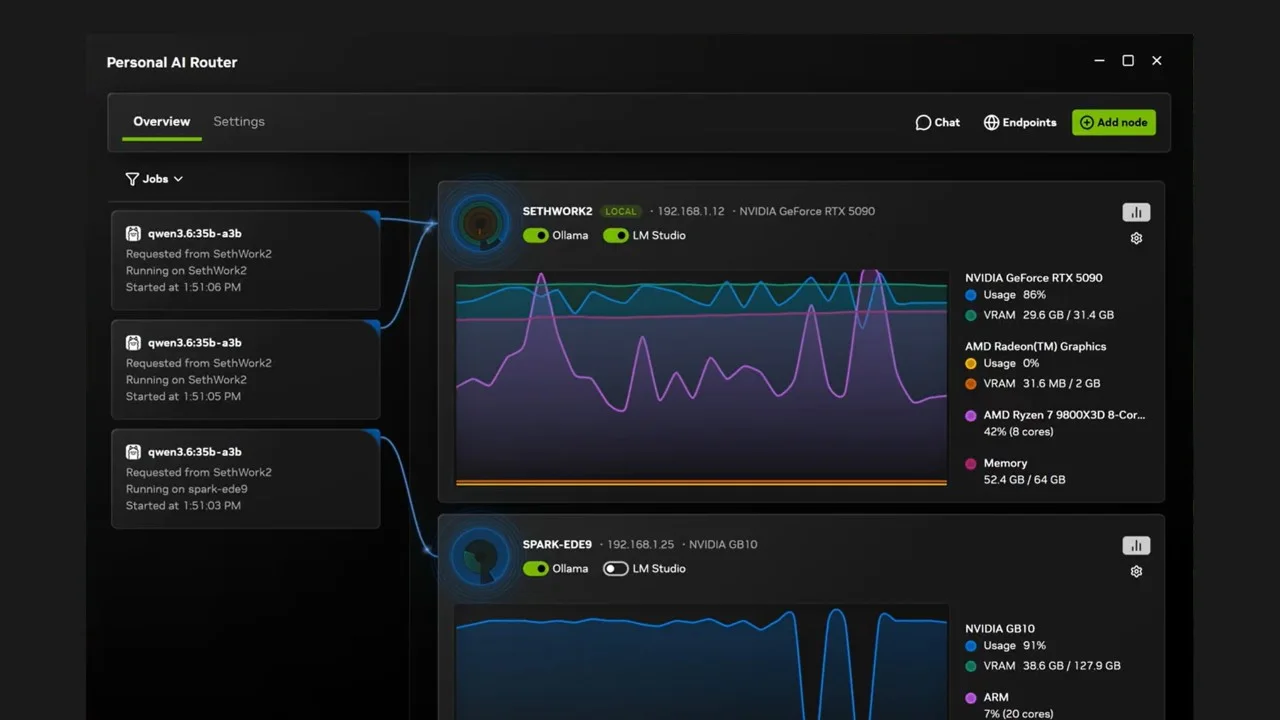
Nvidia has released an open-source software project designed to connect idle computers on a home network and prepare them for running artificial intelligence tasks. Named PAIR, the software discovers compatible machines, links them together, and pools their processing capabilities to handle complex workloads.
Despite its name, PAIR is not a physical hardware router. Instead, it operates as a software layer that coordinates multiple systems to work in parallel. This approach aims to reduce bottlenecks that typically occur when a single graphics card tries to handle demanding processing requests.
Supported hardware and setup
The software works with a wide variety of modern computing hardware found in many households. Compatible devices include Nvidia GeForce graphics cards starting from the RTX 20-series and newer, along with RTX Pro graphics cards and DGX Spark systems. In addition to Nvidia hardware, the software also supports Apple computers equipped with M4 chips or newer.
By utilizing hardware that would otherwise sit idle, the software avoids interfering with a user's primary tasks. The system dynamically adapts as devices join or leave the network. For instance, if a user starts playing a video game on their desktop computer, the software automatically adjusts to account for the change in available resources.
Managing complex workflows
Modern artificial intelligence tasks often rely on agentic workflows — systems where an application breaks a large, complex request down into smaller, manageable jobs. Processing these smaller steps simultaneously across multiple connected computers allows households to put underutilized hardware to work.
Source — Original announcement ↗
Worth a read?
Comments · 0