Microsoft introduces machine learning tool for weather forecast bias correction
Researchers at Microsoft have developed open-source software designed to improve weather forecasts two to six weeks in advance.
2 min read·Thursday, 15 October
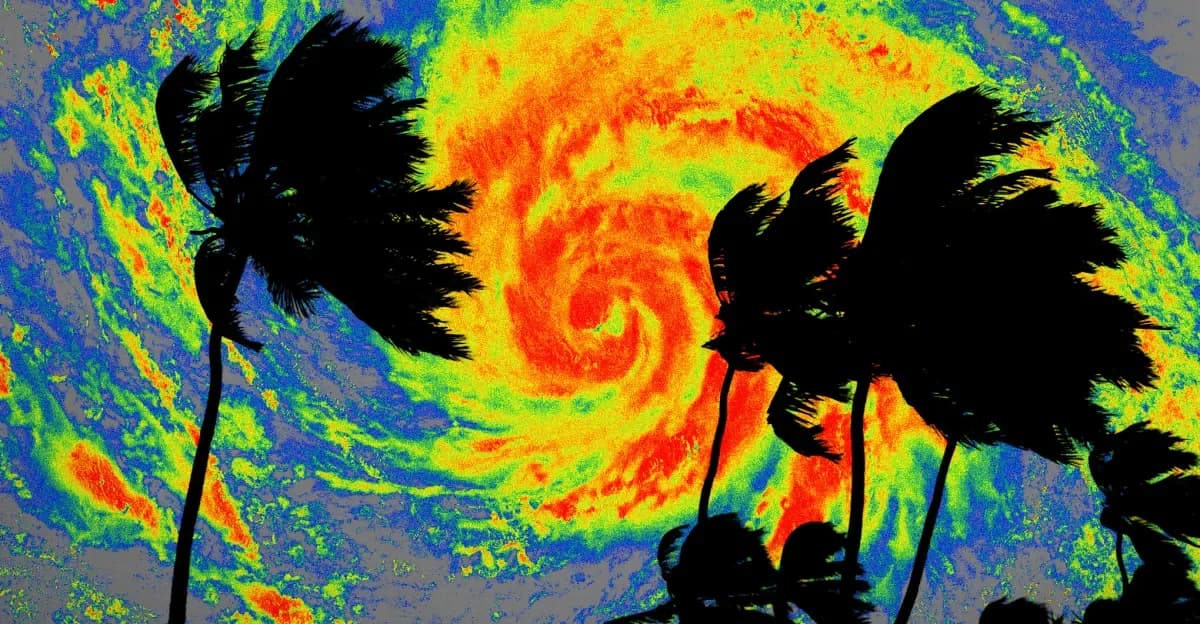
A satellite weather map illustrating hurricane patterns, representing the complexities of long-range forecasting.
Predicting the weather beyond two weeks has long been a challenge for both traditional physics simulations and newer artificial intelligence systems. Both approaches rely on approximations to fill in data gaps, which creates systematic errors that compound over time and make long-range forecasts less reliable.
Microsoft researchers have introduced a new method called Probabilistic Bias Correction, or PBC. Instead of building a standalone weather model from scratch, the machine learning tool is designed to identify and correct systematic biases in existing models. For example, a model might rely on older historical records that fail to account for how greenhouse gas emissions have warmed the planet, leading to systematically cooler temperature predictions.
Traditional physics-based forecasting requires powerful supercomputers, and generative artificial intelligence models typically depend on specialized graphics processing units. In contrast, the new PBC tool is lightweight enough to run entirely on standard central processing units, lowering the technical barrier for resource-constrained weather agencies.
Improved accuracy across models
In a study published in the journal Nature, the researchers found that the software improved the accuracy of a leading physics-based weather model from the European Centre for Medium-Range Weather Forecasts for 98 percent of precipitation targets and 92 percent of temperature targets. The framework also doubled the accuracy of the centre's newer artificial intelligence forecasting system.
The research team included contributors from Microsoft, the Massachusetts Institute of Technology, and the European Centre for Medium-Range Weather Forecasts. The software has been released as open-source code, allowing weather agencies and researchers around the world to adopt and adapt the framework for local forecasting needs.
Google AI Edge Gallery & Gemma 4 Setup GuideFree guide


Comments