Machine learning model improves cyclone forecasting lead times
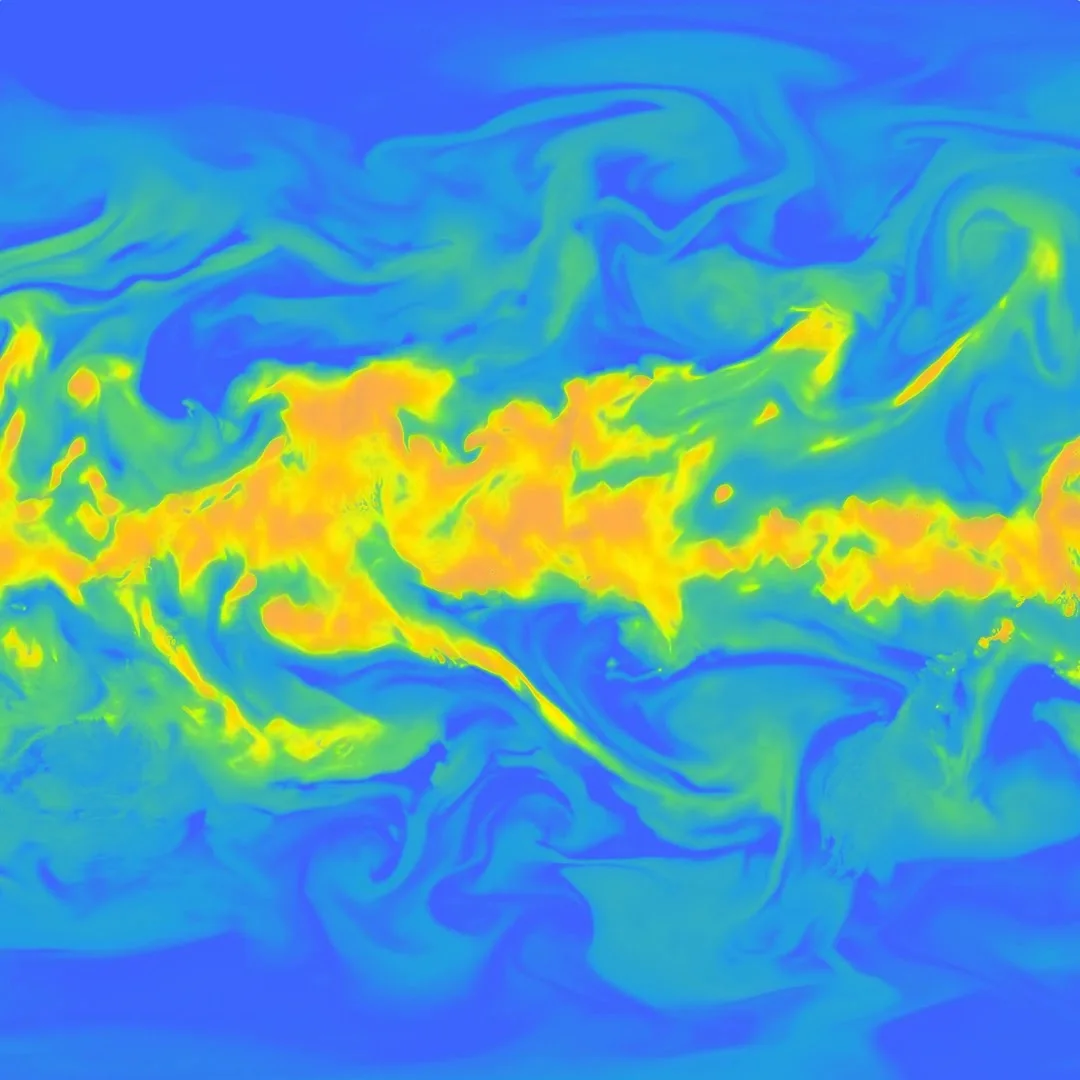
A new artificial intelligence model utilizes functional generative networks to generate large ensembles of weather predictions in under a minute. By scaling ensemble sizes and operating at coarser resolutions, the system provides critical early warnings for extreme weather events.
Published by Jin · 2 min read · 7 AUG 2026
A newly detailed artificial intelligence approach to meteorological forecasting has demonstrated significant improvements in predicting tropical cyclones. The system relies on Functional Generative Networks to efficiently produce large ensembles of varied predictions, capturing the inherent uncertainty of weather patterns.
Performance and Scale
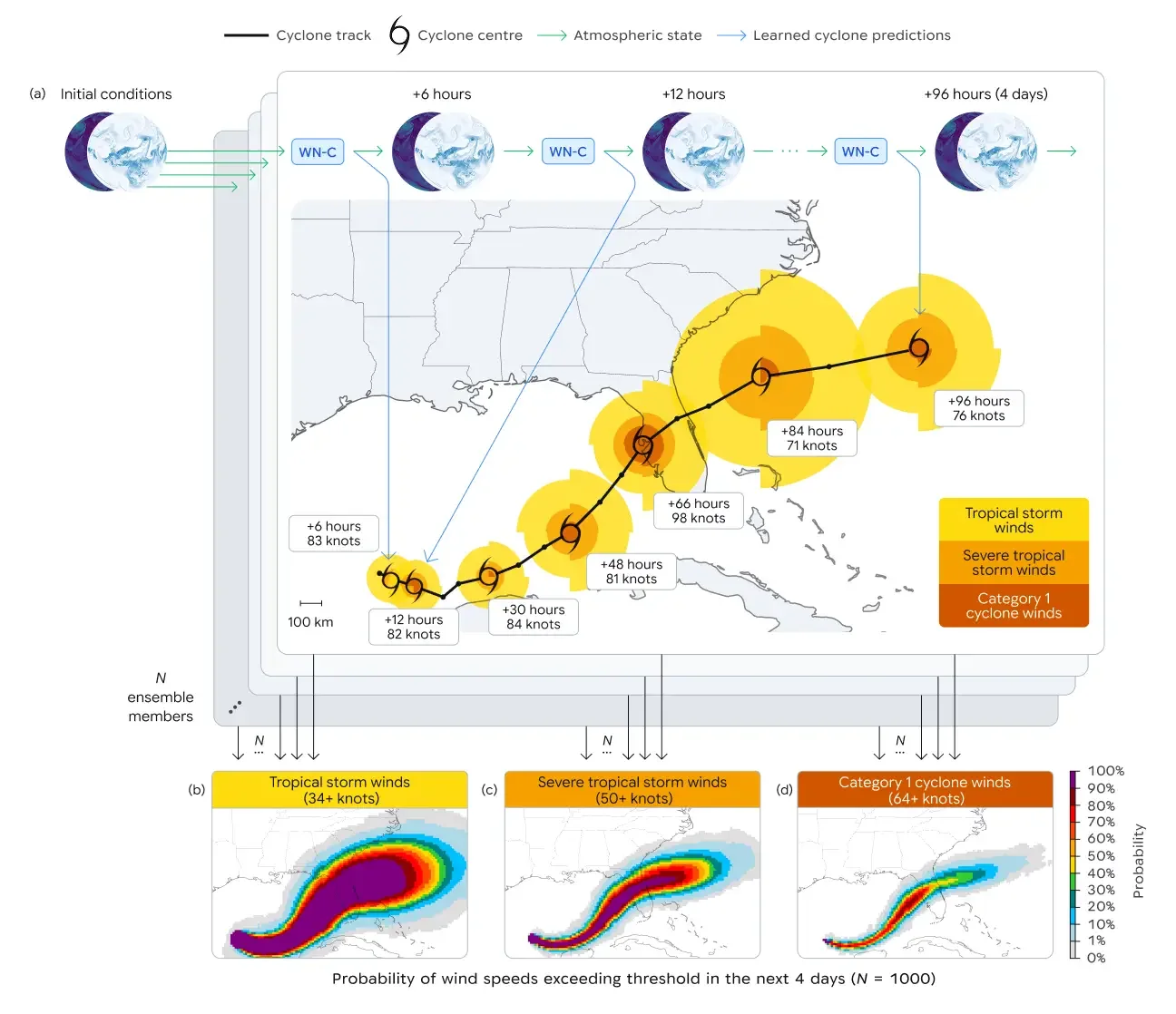
The model can generate a complete 15-day forecast in less than a minute on a single TPU. Last year, the system produced 50 predictions simultaneously, but developers have recently scaled the ensemble size to 1,000 members. This expansion allows the model to capture rare and consequential scenarios, such as rapid intensification events like those observed during Hurricane Melissa in 2025.
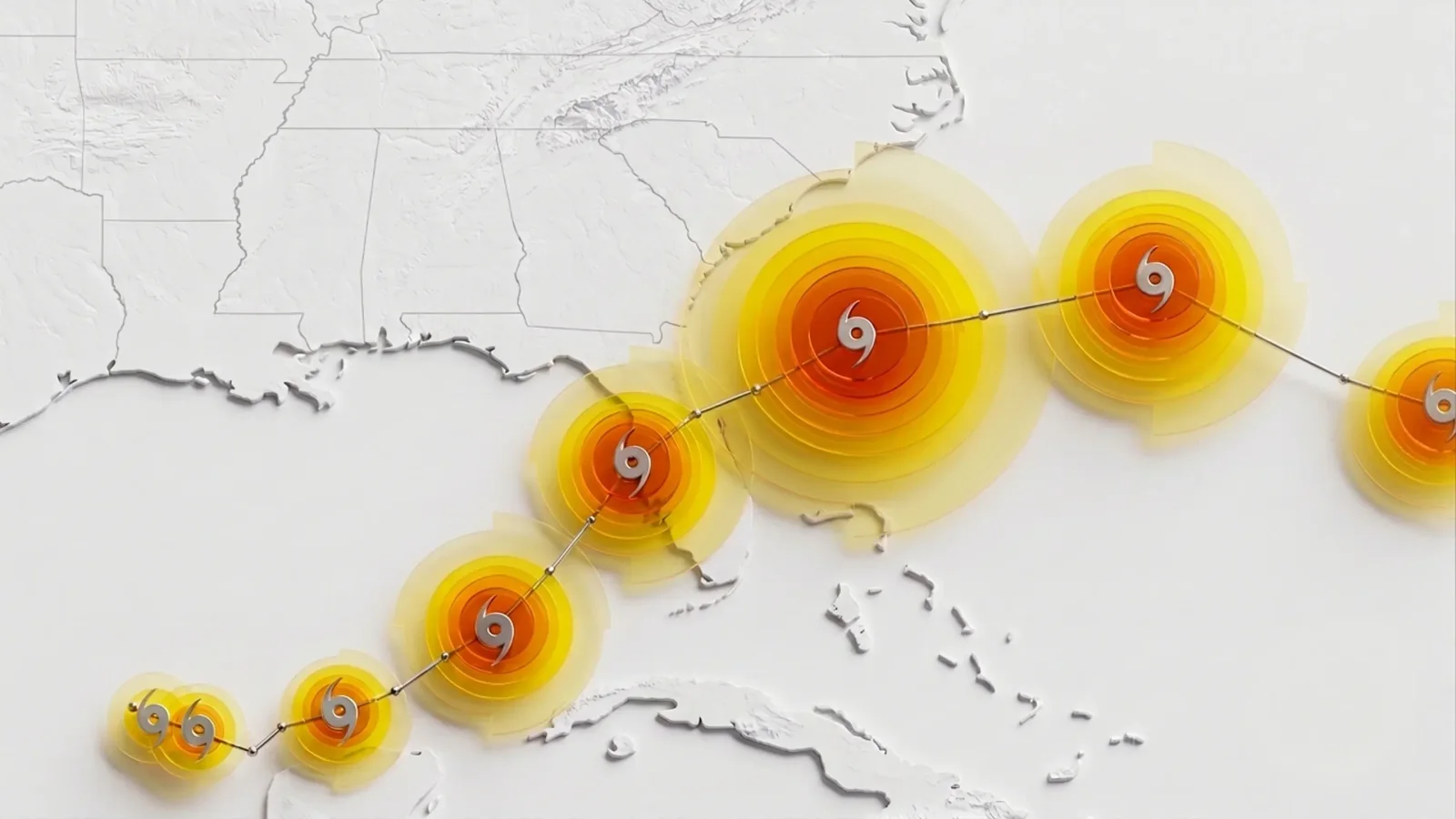
Traditionally, forecasters assumed that operating at very high spatial resolutions was the primary driver of accurate intensity predictions. However, the new system successfully operates at a resolution of 28 by 28 kilometers, which is significantly coarser than traditional numerical models. A smaller variant, operating at 111 by 111 kilometer resolution, has also demonstrated notable performance.
Open Source Availability
To support the broader scientific community, the underlying code and model weights are being made freely available. This release includes WeatherNext Cyclones, which operated during the hurricane season, and WeatherNext 2, an update operationalized in October. Additionally, a compact version named WeatherNext 2-mini is available to run on standard cloud hardware.
Collaborative Research
Developers hope that opening these models to academic researchers, operational agencies, and nonprofits will accelerate progress in global weather prediction. By combining machine learning outputs with the expertise of human forecasters, the meteorological community can better prepare for severe weather and protect vulnerable infrastructure.
Source — Original announcement ↗
Worth a read?
Comments · 0