GPT-6 models demonstrate intrinsic protein-design capabilities
Recent testing shows that the GPT-6 family of models can design new protein shapes and chemical sequences using reasoning and code.
3 min read, Tuesday, 24 November
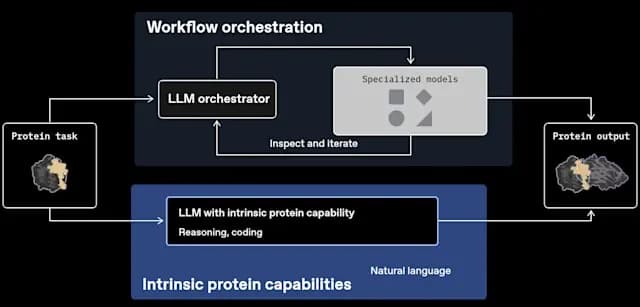
Proteins do much of the work in living cells by driving chemical reactions, carrying oxygen through the blood, and defending the body against infection. Incorrectly shaped proteins can cause disease and dysfunction. These molecules are made from chains of chemical building blocks called amino acids. The order, or sequence, of these amino acids helps determine how a protein folds into a three-dimensional shape, which in turn influences what it does.
Scientists often want to design proteins that can block cancer cell signals or capture carbon dioxide. The challenge is figuring out what three-dimensional structure will enable a protein to do its job and which amino acid sequence will produce that structure. While specialized biology models have made this work more practical, using them requires substantial expertise and software changes for new tasks.
Key facts
- Target Protein
- Influenza A H1 HA
- HA Binder Affinity
- 28 nM
- Cryo-EM Reconstruction Resolution
- 2.9 Å
Intrinsic design without specialized tools
Our GPT-6 family of models can design new protein shapes and the sequence of their chemical building blocks using only reasoning and code, without calling specialized biology models to generate those designs. An internal research model matched or outperformed specialized models on many protein design tasks. Researchers could also guide designs by prompting the model on where a protein should attach and what shape it should take.
In lab tests, proteins based on GPT-6.2 designs showed evidence of binding, or attachment, across five targets. Redesigned antibodies also retained binding. Specialized models helped supply sequences and select candidates for testing. The models draw on mathematics, physics, chemistry, and biological knowledge to reason about protein shapes and interactions with other molecules.
Laboratory validation and results
We tested 322 minibinders against 5 targets in the lab. Of those, 35 tested positive for binding to their intended target, yielding a hit rate of 10.9 percent. We found 5 hits for PD-L1, a protein some cancers use to evade the immune system, along with 3 for IL-7Rα, 1 for TrkA, 8 for VEGF-A, and 18 for IL-17A.
In separate tests, we evaluated whether GPT-6.2 could design new sequences for existing minibinders. For three targets starting with computationally predicted structures, we observed binding in 75 of 88 designs for MDM2 at 85 percent, 26 of 42 for VEGF-A at 62 percent, and 8 of 59 for PD-1 at 14 percent. The amino acid sequences proposed by GPT-6.2 often differed significantly from the originals, showing a median difference of 50 percent for VEGF-A, 43 percent for MDM2, and 15 percent for PD-1.
Source: Original announcement
Worth a read?


Comments