Google DeepMind announces WeatherNext for cyclone forecasting
Google DeepMind has announced WeatherNext Cyclones, an AI-powered weather model designed to improve tropical cyclone forecasting.
1 min read, Sunday, 9 August
Key facts
- Model Name
- WeatherNext Cyclones
- Lead Time Advantage
- One extra day of reliable warning lead time
- Publication Venue
- Nature
Introduction to WeatherNext Cyclones
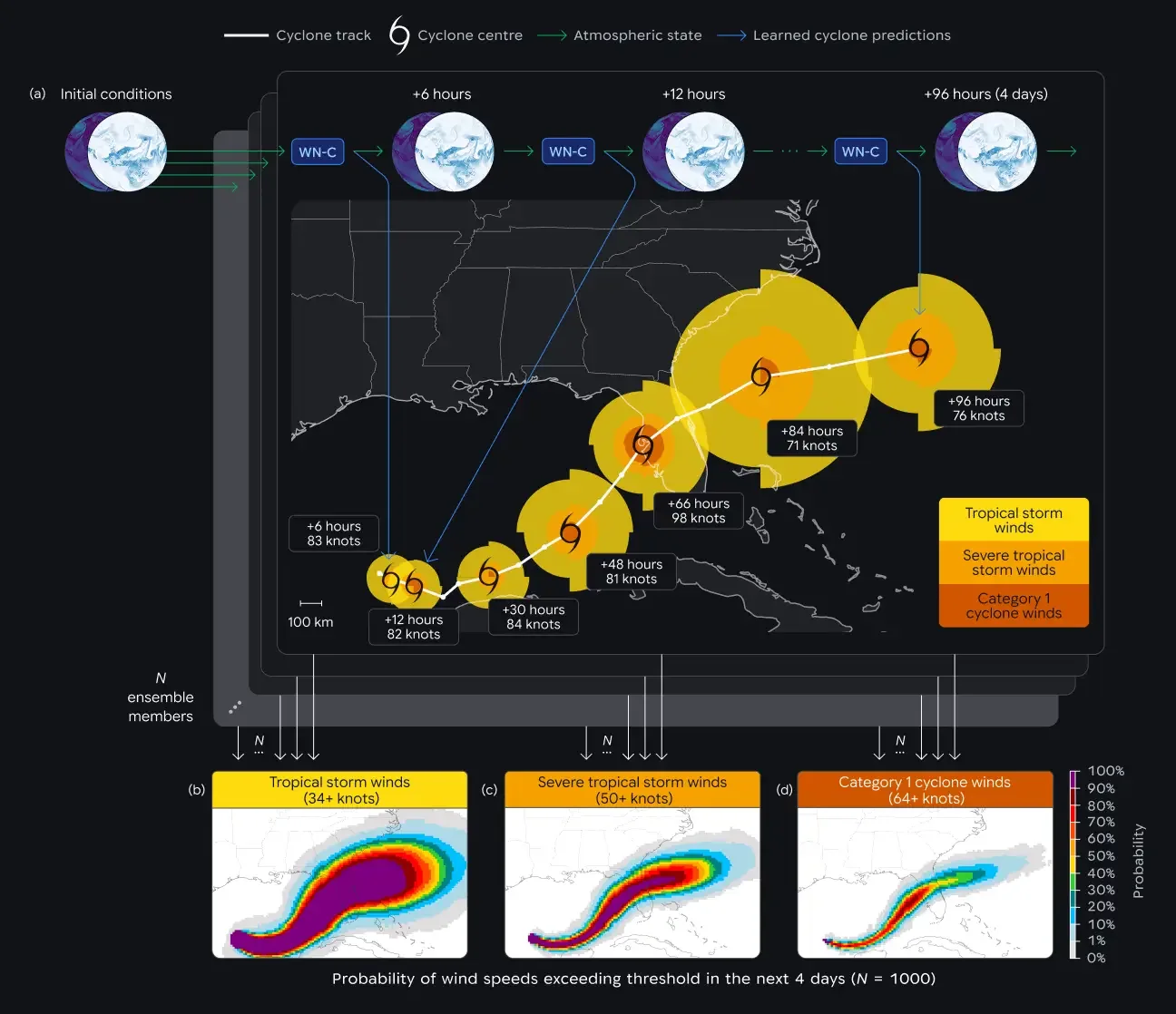
Google DeepMind has announced a new artificial intelligence system called WeatherNext Cyclones, developed to tackle the longstanding challenge of predicting severe tropical storms such as hurricanes and typhoons. According to reports from deepmind.google, gigazine.net, github.com, and blog.google, the model successfully delivers an extra day of reliable warning lead time for a cyclone's track, intensity, and wind structure.
Advancing Meteorological Capabilities
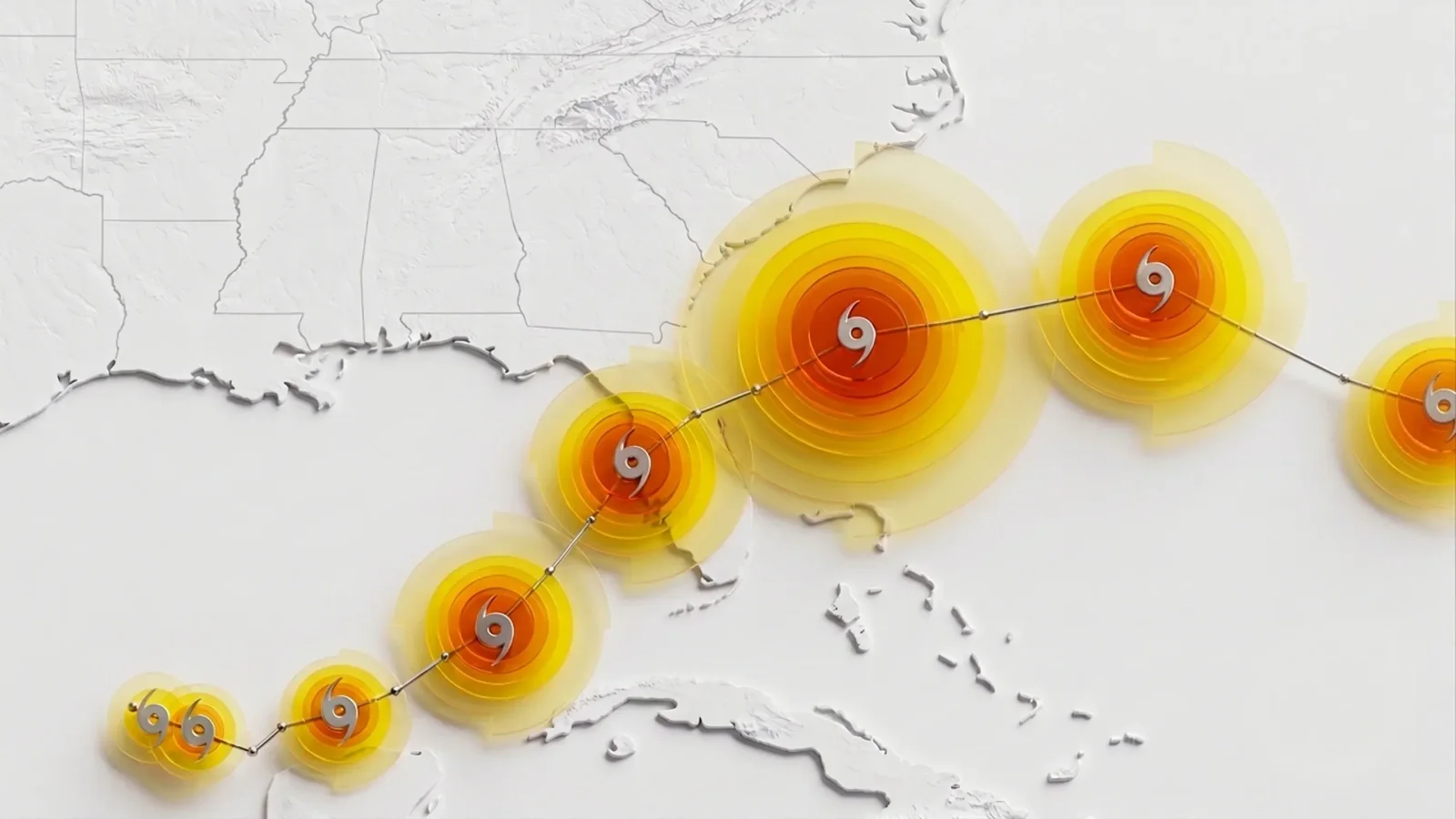
Forecasting tropical cyclones has historically required balancing two different modeling approaches: global models to track where a storm travels and local thermodynamic models to calculate how intense it becomes. As reported by deepmind.google, gigazine.net, github.com, and blog.google, WeatherNext Cyclones bridges this gap by acting as a single unified AI model that predicts track, intensity, and wind structure with state-of-the-art accuracy.
Open-Source Release and Research
Alongside the announcement, the model's proof was published in a peer-reviewed study in Nature. According to reports from deepmind.google, gigazine.net, github.com, and blog.google, Google DeepMind has also made the model available through a free, open-source release, allowing researchers and meteorological agencies to build upon the technology and improve early warning systems worldwide.
Verified details
Google DeepMind's new AI cyclone model, WeatherNext Cyclones, delivered something forecasters have spent a decade trying to achieve: an extra day of reliable warning lead time on a tropical cyclone's track, intensity, and wind structure — and last week it published the proof in Nature alongside a free, open-source release of the model itself in a peer-reviewed Nature study, as reported by deepmind.google, gigazine.net, github.com, and blog.google.
Source: deepmind.google
Worth a read?



Comments