Autonomous vulnerability discovery and patching in the Linux kernel
Researchers built an autonomous pipeline powered by an upcoming cyber model to scan, validate, and patch vulnerabilities in the Linux kernel.
2 min read, Thursday, 5 November
Finding software security flaws has traditionally required sustained manual effort from human experts. A recent research project explored how an automated pipeline using frontier models can handle vulnerability discovery, dynamic validation, exploitability assessment, and patch generation at scale.
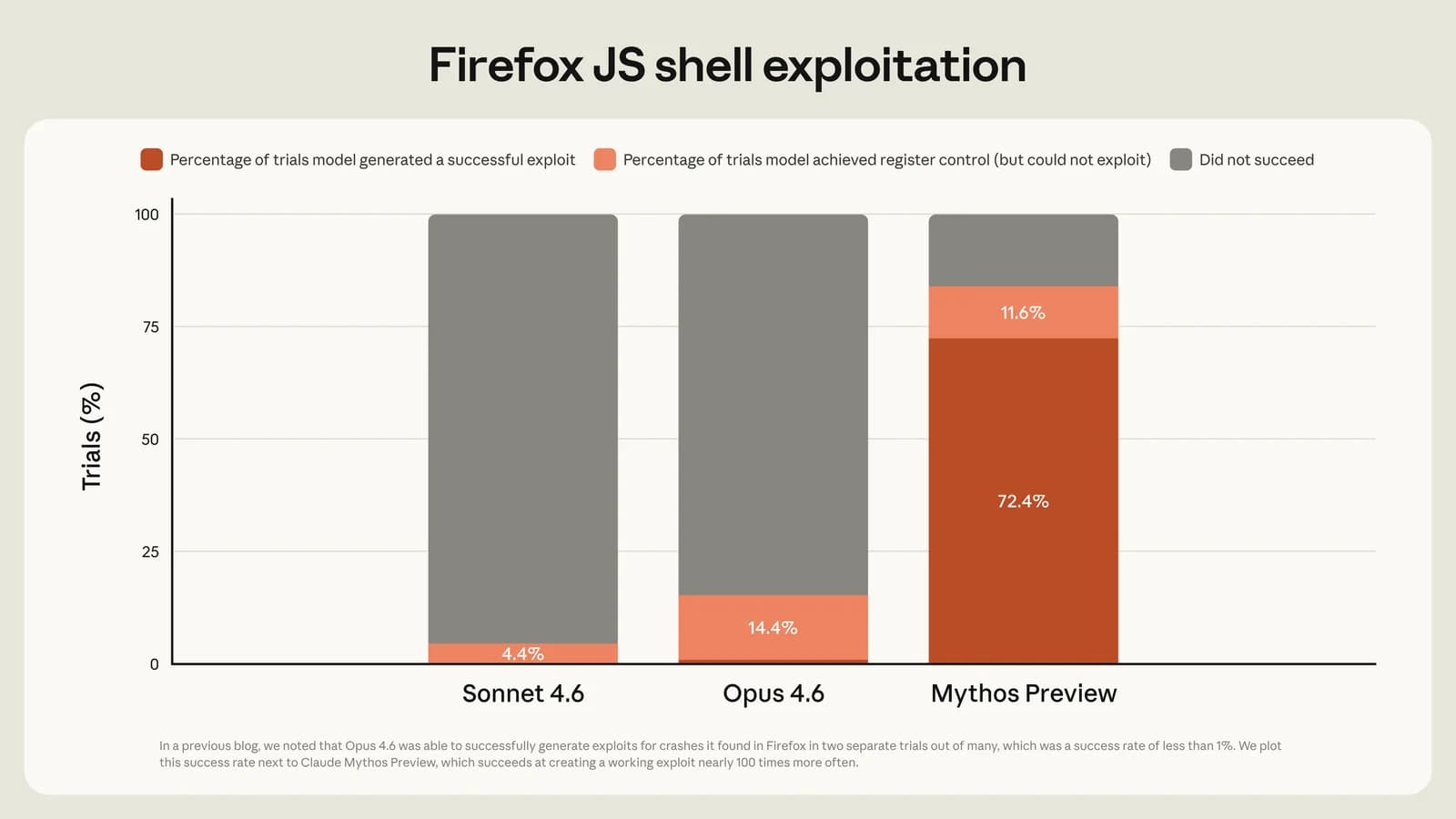
Benchmark showing the success rate of model-generated exploits compared across different AI systems., Source ↗
The five stage pipeline
At a high level, the automated system works through five distinct phases:
Vulnerability discovery: Scout and analyst agents scan parts of the codebase for potential security flaws.
Dynamic validation: Agents attempt to reproduce each candidate in an isolated virtual machine to confirm it works.
Exploitability assessment: The system tests whether the vulnerability allows an unprivileged local user to gain root access.
Patch generation: Agents write candidate patches to fix the identified bugs.
Human review: Security researchers review the exploits, root cause analysis, and patches before reporting them to maintainers.
Findings in the Linux kernel
In a test run on the Linux kernel, scout agents identified 5,034 audit targets covering about 2.8 million lines of code. Analyst agents then produced 2,308 candidate findings. Using an isolated environment running a stock desktop operating system, the system dynamically reproduced 1,724 vulnerabilities and generated 948 working local privilege escalation exploits.
The total API cost for this run was $1,213,430, which breaks down to roughly $1,279 per exploit. In a separate test on an adapted kernelCTF environment with a reduced attack surface, the pipeline produced 25 information leak proofs of concept and 21 local privilege escalation exploits at a cost of $32,936 in API credits.
Security implications
Automated systems can find and exploit vulnerabilities much faster than traditional manual reviews. As frontier models become more capable, automated patch generation will likely become essential for securing complex software projects before malicious actors can find and use the same flaws.
The Ultimate 2026 Free AI API Engine: Top 10 Provider Blueprints & Setup GuideFree guide



Comments