An organizational second brain for expert knowledge preservation
Large organizations often struggle to preserve the specialist knowledge that lives entirely inside their experts' heads. A new AI architecture combines structured knowledge files and multi-step reasoning recipes to capture and compound institutional expertise.
Published by Jin · 3 min read · 3 SEPT 2026
- 200+
- 80%
In many large organizations, the most valuable specialist knowledge lives inside people's heads rather than in written documents. In domains like compliance, experts often spend days on manual research or answering routine questions, leading to delays and inconsistent assessments.
To solve this challenge, engineers at Meta developed an AI agent that acts as a second brain. It captures how domain experts reason and makes that knowledge accessible to everyone across the organization. The system is designed to generalize to other enterprise fields such as finance, security, and engineering.
The four-layer architecture
Off-the-shelf language models often lack the specific institutional context required for high-stakes decisions. General models can summarize general information, but they struggle to distinguish between what an organization could do and what it should do based on historical positions and company priorities.
The system relies on four distinct layers that depend on each other:
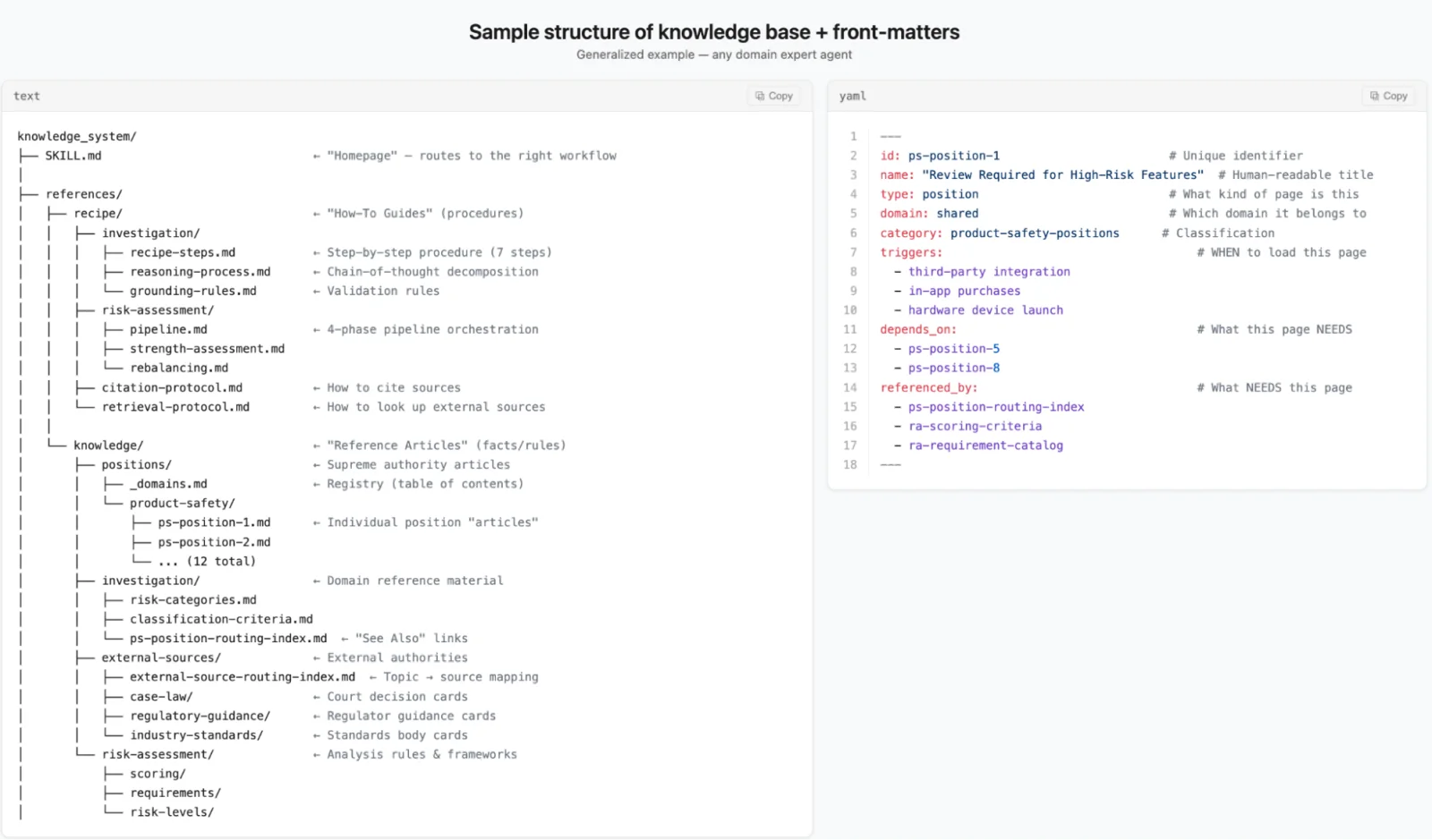
- A structured knowledge system with a file structure that enables automated editing.
- A reasoning layer with explicit procedures that make failure attribution tractable.
- An evaluation framework that gates every change.
- An improvement loop that feeds back into both knowledge and reasoning.
Organizing knowledge files
Instead of retrieving raw document chunks at inference time, which can be slow and inconsistent, the system uses a long-running offline process to distill source documents into structured knowledge files. These files are organized into a strict taxonomy of over 200 files.
Source — Original announcement ↗
Worth a read?
Comments · 0