
A multi-agent framework for coherent long-form video generation
Generating long-form videos with artificial intelligence often results in character drift and visual inconsistencies across shots. A new multi-agent framework orchestrates foundational models to maintain narrative continuity and visual stability over extended runtimes.
Published by Jin · 2 min read · 25 SEPT 2026
- Co-Director
- GenAD-Bench
- 400-scenario dataset
- Artificial Intelligence (cs.AI)
- arXiv:2604.24842
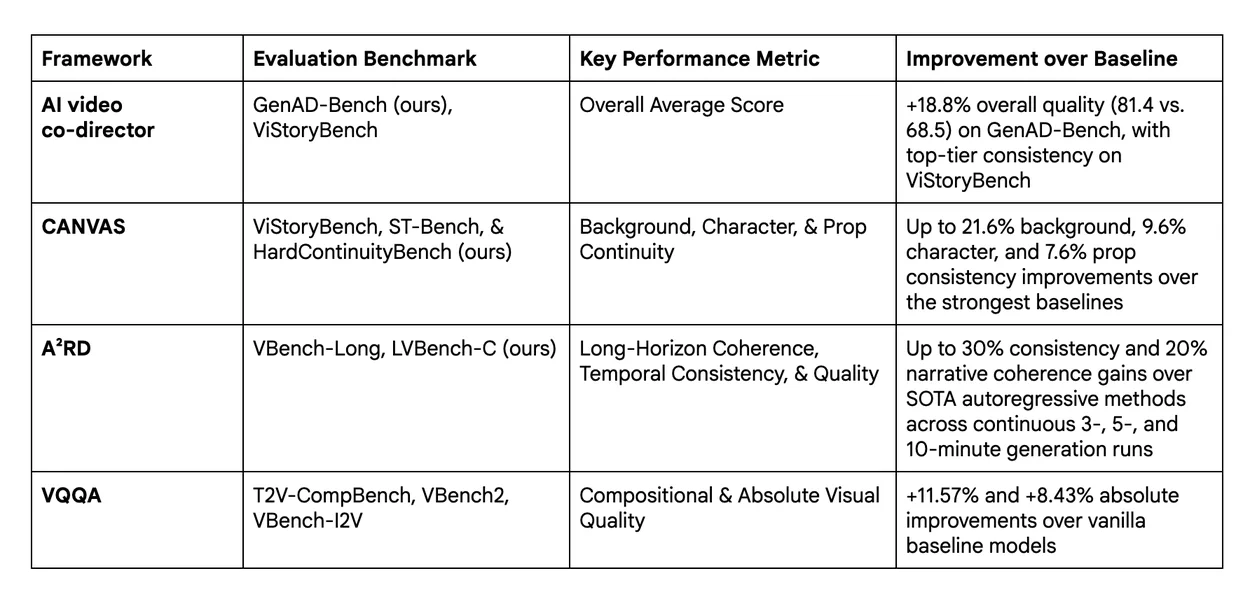
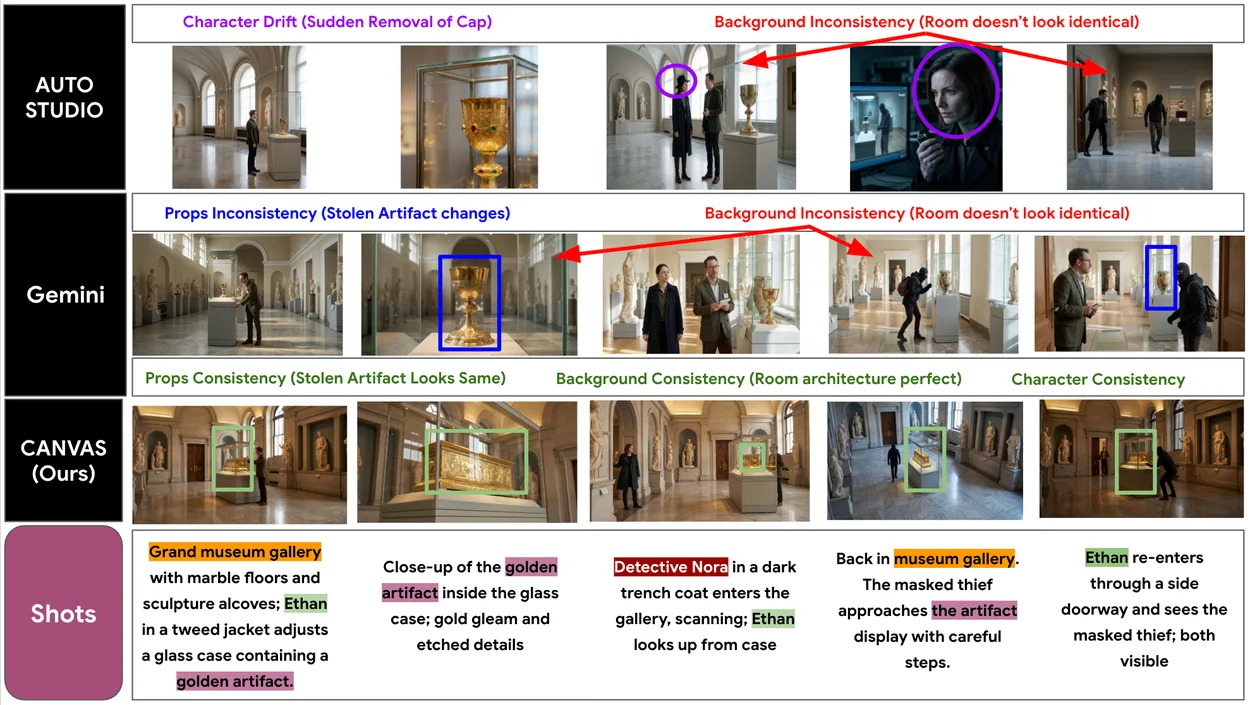
Recent advancements in video diffusion models — systems that generate realistic visual scenes from text in seconds — have made high-quality clip generation widely accessible. However, stringing these clips together into long, coherent stories remains difficult. Standard pipelines suffer from semantic drift, where character clothing or scenery subtly changes between shots, and cascading failures, where an early error ruins the rest of the video.
The challenge of long-horizon video
When artificial intelligence generates a video shot by shot independently, small errors quickly compound. Characters change their appearance, room layouts shift unexpectedly, and narratives fail to progress. This happens because individual modules operate without a unified memory of the global story. Fixing these issues typically requires exhausting manual intervention.
A unified orchestration framework
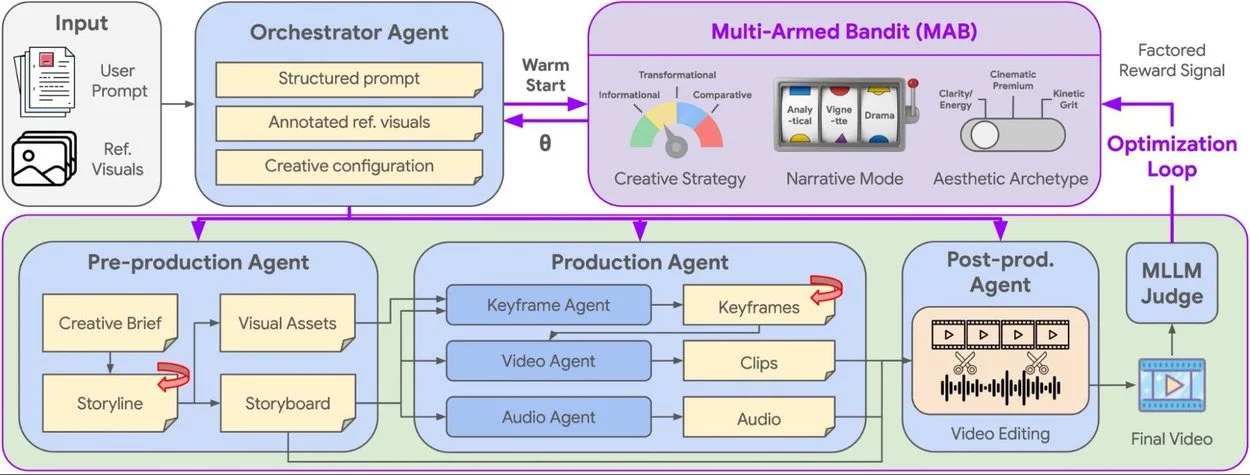
To solve these problems, researchers have introduced a multi-agent framework designed to act as a video co-director. Built on top of Gemini and Veo, this architecture treats long-form video generation as a global optimization and world-state tracking problem. It coordinates four foundational pillars:
Source — Original announcement ↗
Worth a read?
Comments · 0