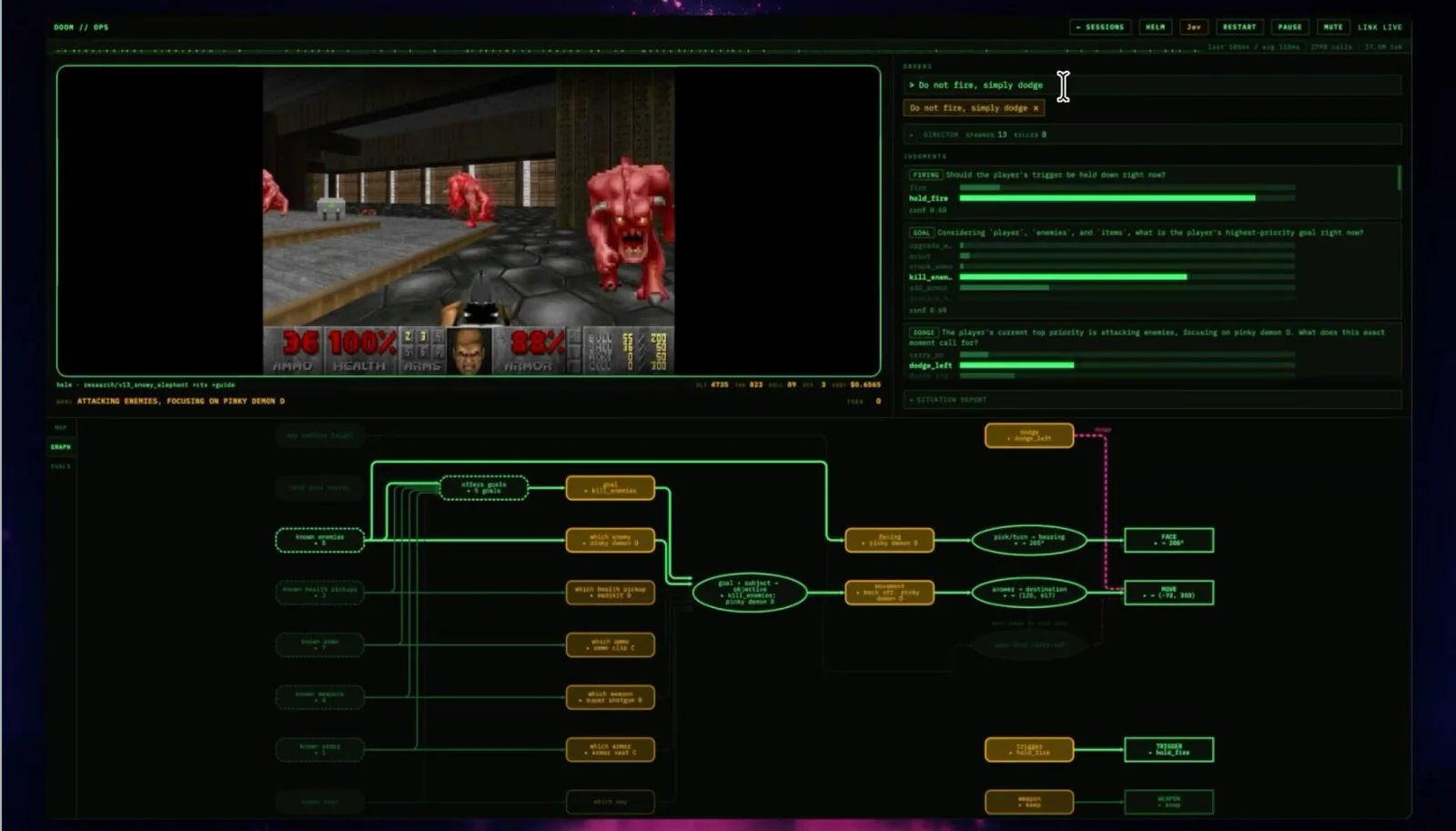
A former openai researcher releases an artificial intelligence model that avoids human language
TypeSafe AI has launched a new model called Jev that outputs calibrated decisions rather than text. By sidestepping human language, the system aims to offer faster, cheaper, and hallucination-free software automation.
Published by Jin · 2 min read · 19 SEPT 2026
A former OpenAI researcher who helped invent reinforcement learning from human feedback has launched a startup to build a different kind of artificial intelligence. Diogo Almeida left OpenAI two years ago to found TypeSafe AI. This week, the company released a transformer-based model called Jev.
Unlike traditional systems, Jev is not a large language model. It does not output human text. Instead, it produces probabilities, which the company describes as calibrated decisions.
Moving past human language
According to the creators, optimizing software for human language limits its usefulness in automation because computers operate differently. By avoiding language generation, Jev achieves high speeds and low operational costs. Because users define the allowed outputs in advance, the model cannot hallucinate.
Input tokens are metered by the billion rather than the million, and output tokens are free. The high demand following its release temporarily overwhelmed the company's API servers.
Practical applications
Software developers are testing Jev for automation tasks such as command classification and email sorting. Tests indicate it can process tasks significantly faster and at a fraction of the cost of traditional models, while also providing confidence scores as explicit probabilities.
Beyond standalone automation, developers suggest the model can monitor other systems. Because running large language models to check other models becomes expensive, Jev offers a low-cost alternative for tracking agent traces, preventing security jailbreaks, and routing workloads.
Training and synthetic data
The startup trains Jev exclusively on synthetic data using a technique called reinforcement learning from calibrated decisions. The company refers to it as a System One model focused on intuition rather than complex reasoning, designed to make reliable intelligence widely accessible for distributed software.
Source — Original announcement ↗
Worth a read?
Comments · 0