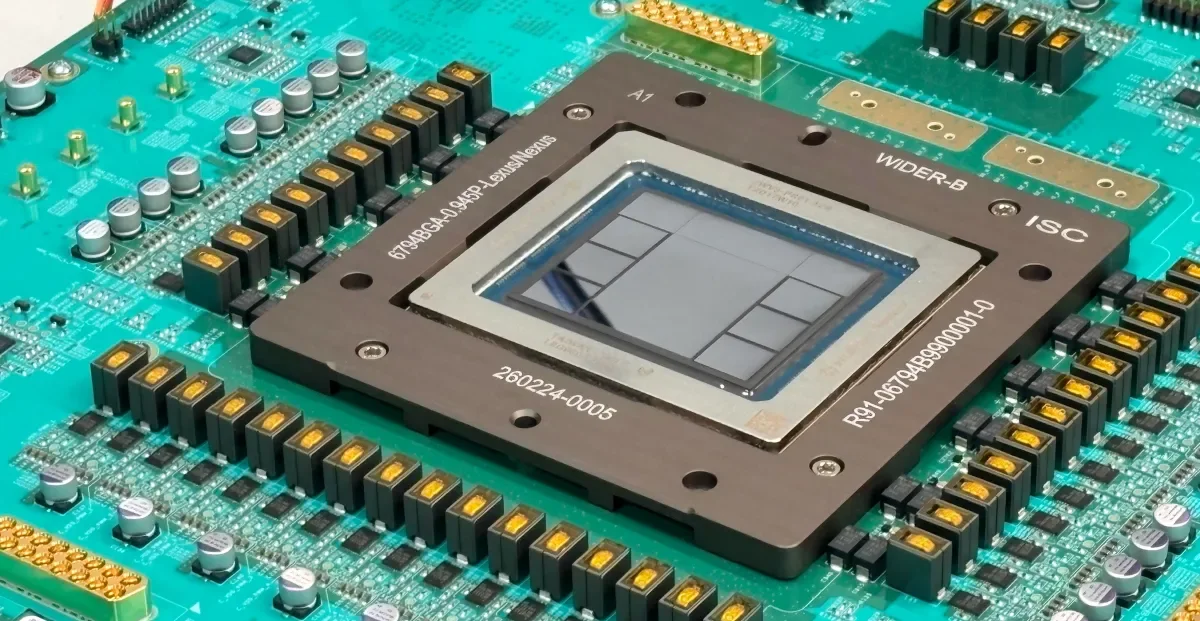
OpenAI details performance benchmarks for new custom artificial intelligence chip
OpenAI has shared new performance data for its custom artificial intelligence chip, known as Jalapeño. The specialized processor reportedly outpaces competing hardware while offering improvements in speed and energy efficiency.
Published by Jin · 2 min read · 26 AUG 2026
- Jalapeño
- Broadcom
- June
- End of this year
| Metric | Jalapeño | Nvidia GB200/GB300 |
|---|---|---|
| Work per Watt | 1.5x to 1.9x higher | Baseline |
| End-to-End Latency | 1.7x to 3.6x lower | Baseline |
OpenAI has released new performance details regarding its custom processor designed for artificial intelligence workloads. The chip, called Jalapeño, was developed in partnership with Broadcom and is classified as an Application-Specific Integrated Circuit — a specialized semiconductor built for a single, specific purpose.
Performance and Benchmarks
In benchmark testing conducted using the InferenceX platform, Jalapeño was compared against competing hardware systems including Nvidia's GB200 and GB300 superchips. According to OpenAI hardware vice president Richard Ho, the chip is designed to address a common industry compromise where systems must choose between minimizing delay or maximizing total output volume.
OpenAI stated that Jalapeño delivered between 1.5 and 1.9 times more work per watt across three tested artificial intelligence models. These models include GPT-OSS 120B, DeepSeek R1, and Kimi K2.5 1T. Additionally, the processor achieved between 1.7 and 3.6 times lower end-to-end latency across those same models, representing a reduction in the time required to generate a complete response.
Deployment Plans
The processor was first introduced in June. OpenAI plans to begin small-volume deployments of the hardware by the end of the year, followed by a gradual increase in production volume throughout 2027.
Despite the introduction of its own hardware, the organization does not intend to completely replace its existing infrastructure. Company representatives noted that partnerships with external hardware providers will remain a component of its broader infrastructure strategy, while work on second and third generations of the processor is already underway.
Source — Original announcement ↗
Worth a read?
Comments · 0